
7th IASPEI / IAEE International Symposium · Effects of Surface Geology on Seismic Motion
Integration of Non-Ergodic Site Response into NEHRP Provisions & ASCE-7
Author affiliations
- 1Sabol-Scott Professor, UCLA Samueli Engineering, Los Angeles, CA
- 2Principal, Engeo, San Ramon, CA
- 3Principal Engineer, AECOM, Seattle, WA
- 4Principal Geotechnical Engineer, Rutherford + Chekene, San Francisco, CA
- 5Consultant, Santa Monica, CA
- 6Principal Engineer, Slate Geotechnical Consultants, Oakland, CA
- 7Professor and Chair, University of Memphis, Memphis, TN
- 8Principal, MAW Seismic, LLC, Seattle, WA
- 9Senior Engineer, Slate Geotechnical Consultants, Oakland, CA
- 10Principal Engineer, Kleinfelder, Rancho Cordova, CA
Section 1
NEHRP Provisions
Chapter 21: Site-Specific Ground Motion Procedures for Seismic Design
- Chapter 21 serves as an alternative to default design motions (Chapter 11).
-
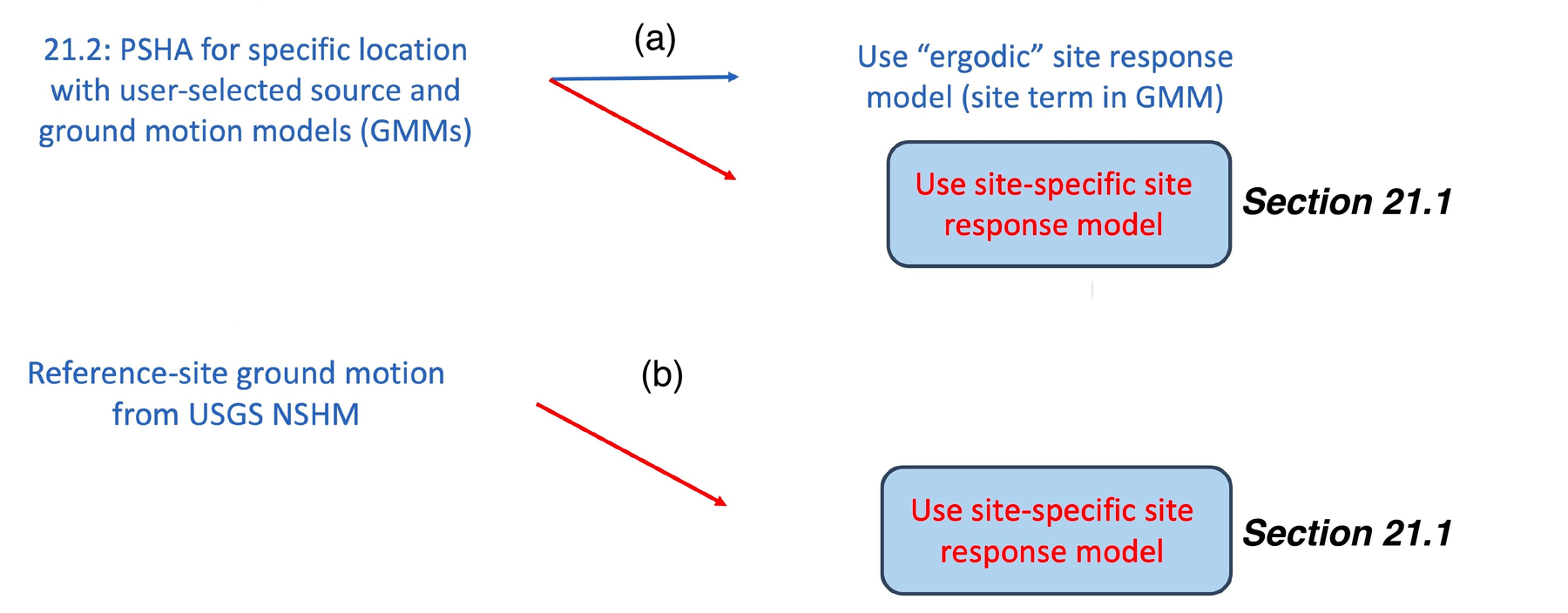
Section 21.1 pertains to site-specific site response, which can be applied in two contexts (Figure 1):
- Option 1 (Figure 1a): Site-specific PSHA applied with ergodic site factors (in which case Section 21.1 is not used) or site-specific site response (Section 21.1).
- Option 2 (Figure 1b): PSHA for reference site from NSHM (Petersen et al. 2024) for reference site with site-specific site response (Section 21.1).
- Section 21.1 can be applied using Site-Specific Site Response or Hybrid Ground Motions approaches.
Section 2
Current Procedures (NEHRP 2020 and Before)
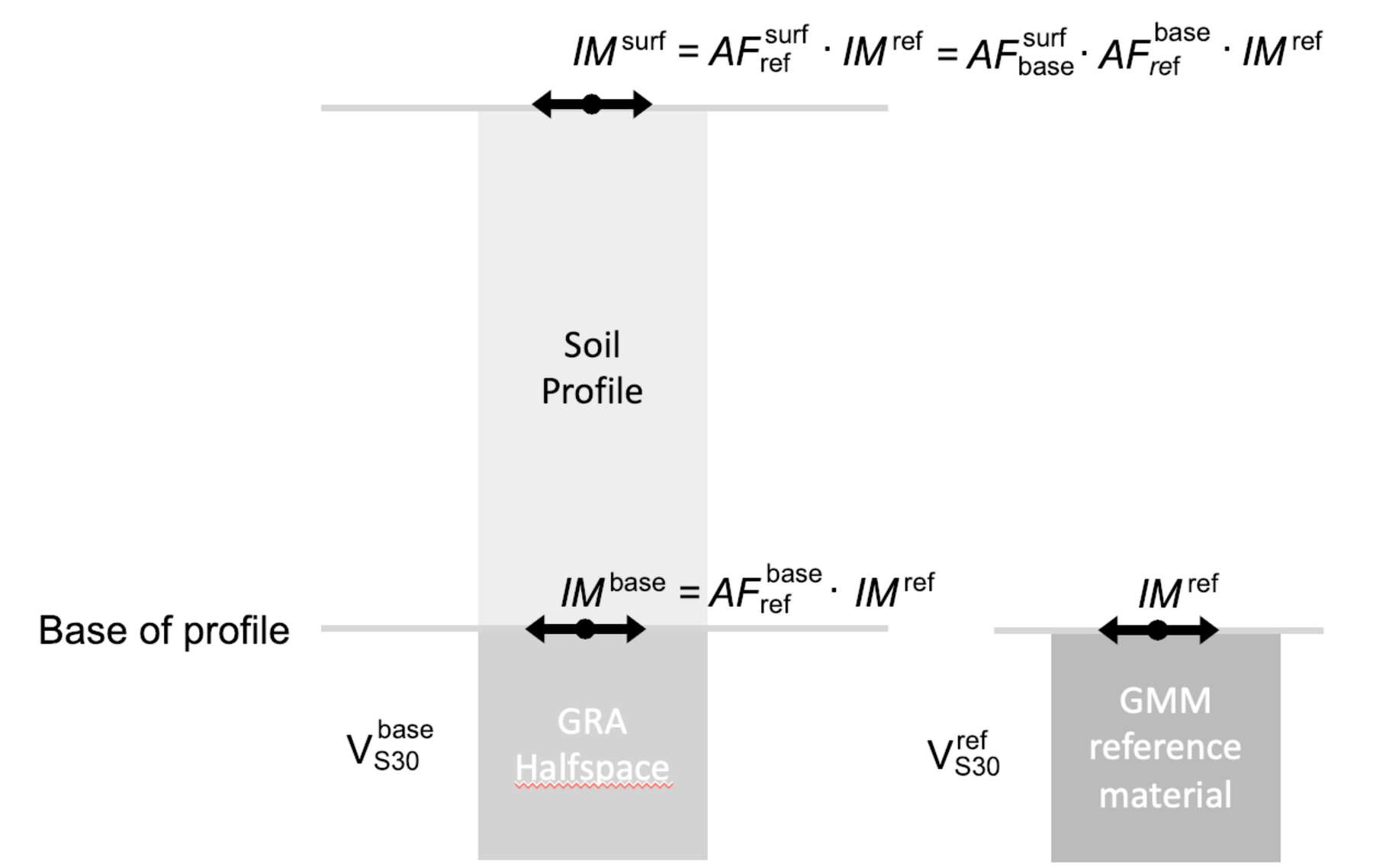
Requirements
- Base motion
- Site condition model
- Ground response analyses (GRA)
- Applied with hybrid approach
Issues Motivating New Procedures
- Period limitation of GRA
- Hazard level not preserved
- Lack of guidance on non-ergodic site response
Section 3
Site-Specific Site Response
Required model elements
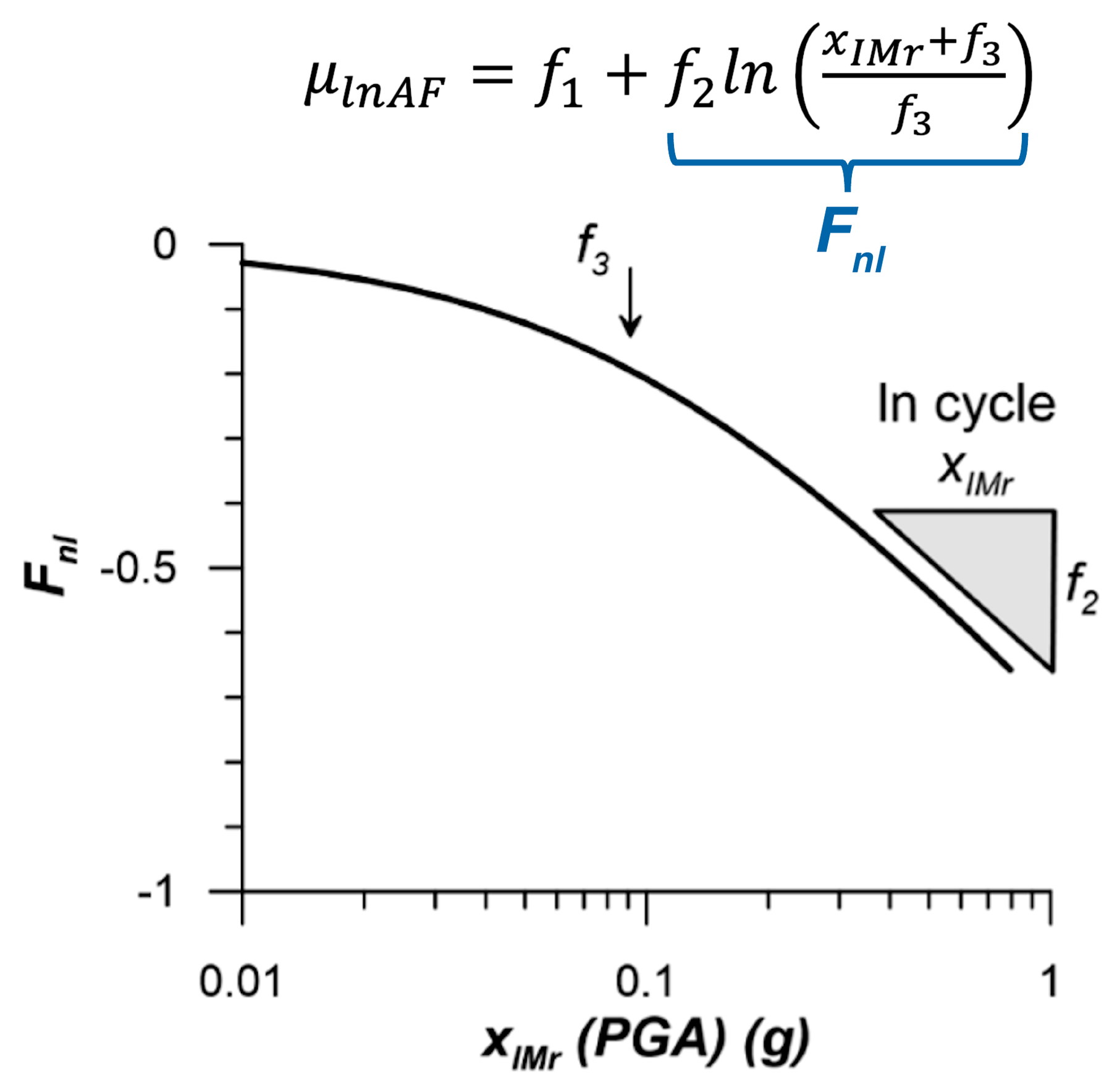
- Mean model, μlnAF
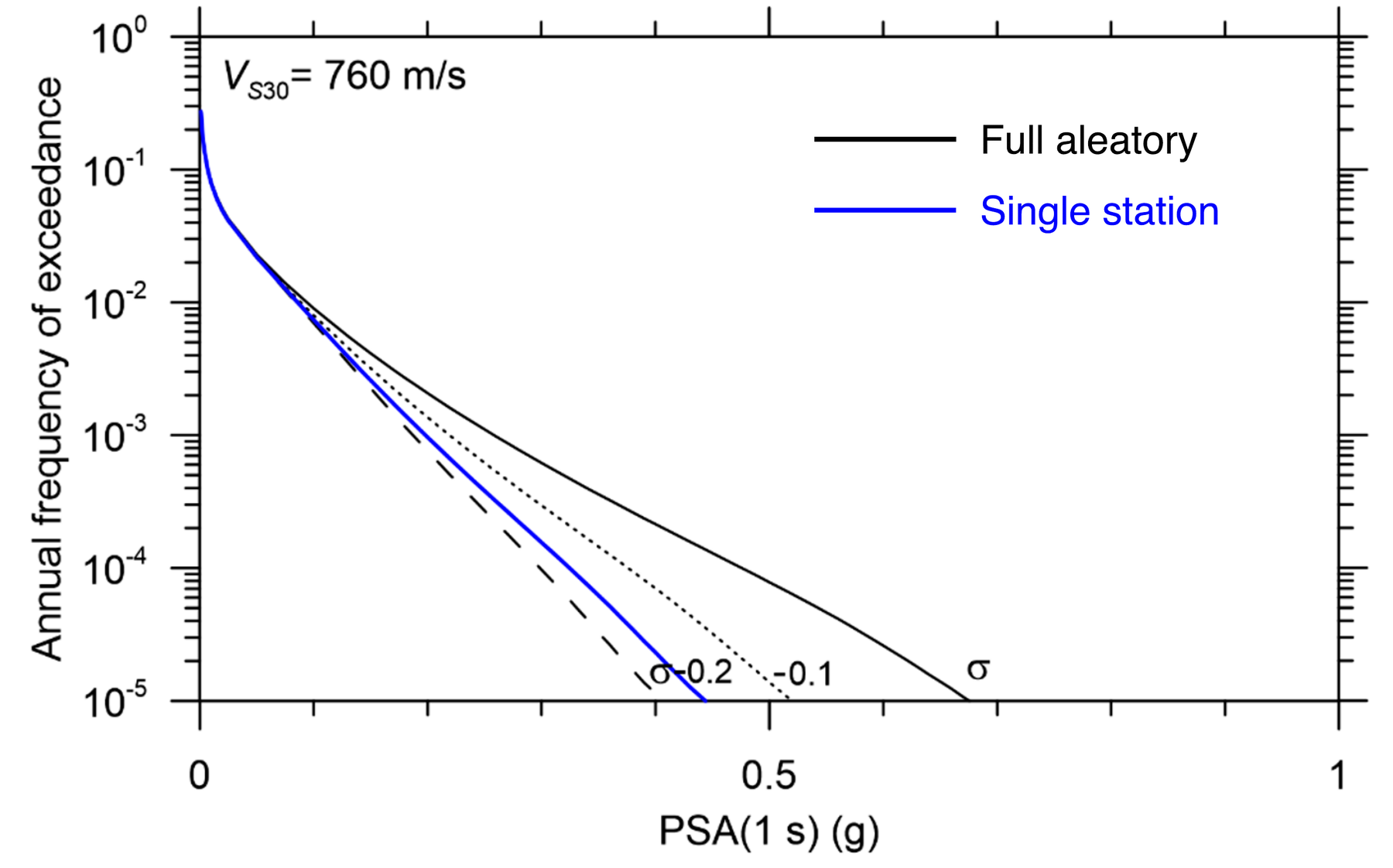
- Aleatory variability
- Epistemic uncertainty
- f2 represents the slope of the log amplification with the log of xIMr
- f3 (in the same units as xIMr) represents a transitional level of xIMr between linear and strongly nonlinear response.
Can be derived from
- Approach 1: Ground motion data
- Approach 2: Ground response analyses
- Combinations of 1 & 2
Allowable reductions
- Point of comparison is MCER spectrum from USGS seismic design Geo-Database
- NEHRP 2020 (ASCE-7/22) and before: maximum 20% reduction
- NEHRP 2026, site-specific approach: maximum 30% reduction
Section 4
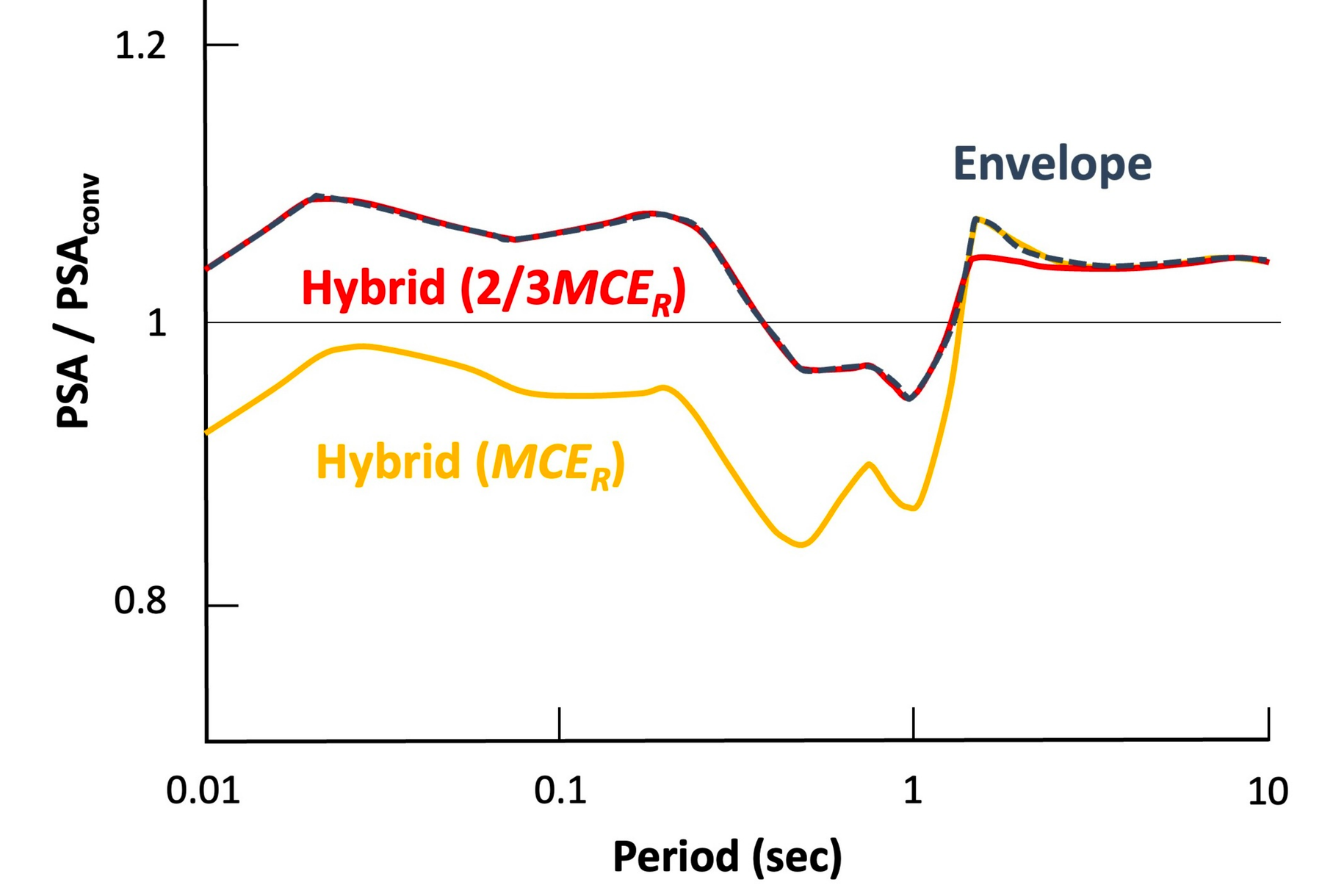
Hybrid Ground Motions
Hybrid Ground Motions Approach
- Amplification computed using GRA with MCER and ⅔MCER
- No amplification models (f1, f2, f3) required
- Hazard computed using full φS2S (IMref)
-
Enveloped hybrid approach:
- Max 20% reduction
Section 5
Closure
Approvals
- Approved for 2026 NEHRP Provisions and Commentary. Publication expected November 2026.
- Final approval for ASCE 7/28 pending.
We advanced this proposal because
- Non-ergodic site response is being used; needs to be reflected in NEHRP Provisions and Commentary for guidance / guardrails.
- Current procedures in Sec. 21.1 are frequently unconservative.
- Other improvements were needed.
References
- Building Seismic Safety Council, BSSC (2020). NEHRP Recommended Seismic Provisions for New Buildings and Other Structures. Volume I: Part 1 Provisions, Part 2 Commentary. Report No. FEMA P-2082-1, Federal Emergency Management Agency, Washington DC.
- Kramer SL and JP Stewart (2025). Geotechnical Earthquake Engineering, 2nd Edition. Taylor & Francis, New York, NY. 1060 pages.
- Petersen MD, AM Shumway, PM Powers, EH Field, MP Moschetti, KS Jaiswal, et al. (2024). The 2023 US 50-State National Seismic Hazard Model: Overview and implications. Earthquake Spectra 40(1): 5–88.